


Photo by Bernd 📷 Dittrich on Unsplash
European carbon allowances are trading at their highest level in more than a year. EUAs, the permits that power stations, factories and airlines must buy to cover their emissions under the EU Emissions Trading System, touched €87 a tonne this week, up around 12% on a year ago. That is a striking move for a market regulators have just tried to loosen.
In July, the European Commission unveiled a significant overhaul of the EU ETS: a slower annual cut to the emissions cap from 2031, and free allowances extended to 2037 for companies investing in decarbonisation projects within Europe. Both changes should, in theory, ease the pressure that has been driving prices up. Instead prices have kept climbing. Analysts have described the reform as pulling in opposite directions: it expands funding tools and tightens some conditions on free allocation even as it weakens the underlying scarcity that gives the carbon price its signal. For now, tightening supply from the phase-out of free allocations and a shrinking cap is winning the argument.
Britain’s carbon price tells a different story, and a less flattering one. UK Allowances, the equivalent permits under the UK’s own Emissions Trading System, are trading at around £62 a tonne. Converted at current exchange rates, the EU price is worth roughly £74.50. That leaves UKAs trading at a discount of around 17% to their European counterpart, a gap that has persisted, and at times widened, through most of 2026.
This was not supposed to be the arrangement. In May 2025 the UK and EU agreed in principle to link their two carbon markets, making allowances from each system valid in both. The European Commission secured a negotiating mandate that November, and formal talks began in the new year. Linkage would do more than tidy up a post-Brexit anomaly. It would let UK exporters avoid the EU’s carbon border tax, which begins charging in earnest this year on steel, cement, aluminium, fertiliser, hydrogen and electricity. The UK government has put the potential saving at around £800m. It would also, mechanically, be expected to pull UKA prices up toward the EU level, since a persistent domestic discount makes little sense once the two allowances become interchangeable.
Momentum built through the first half of 2026. A summit tentatively pencilled for 13 July was meant to finalise the deal, timed to coincide with the Commission’s reform proposals. UKA prices moved on the expectation, rising sharply in the weeks beforehand as traders priced in convergence.
Then British politics intervened. Keir Starmer resigned as prime minister a week after that summit date, succeeded by Andy Burnham. What became of the linkage timetable amid the transition is not entirely clear from public reporting, and it is worth treating as an open question rather than a settled one. What is clear is that as recently as this week, analysts were still describing the UK’s ability to meet its own tightening emissions cap through the 2030s as conditional on linkage actually succeeding, language that reads more like a pending negotiation than a concluded one.
That matters more than a technical footnote in a niche market. Every month the two systems remain unlinked is a month in which the discount functions as a quiet tax on UK exporters, one currently being paid in the form of carbon border charges that a completed deal was meant to remove. It is also a month in which the UK’s own decarbonisation path grows narrower, since a smaller, standalone market gives British industry fewer and more expensive ways to meet a shrinking cap than a linked market would.
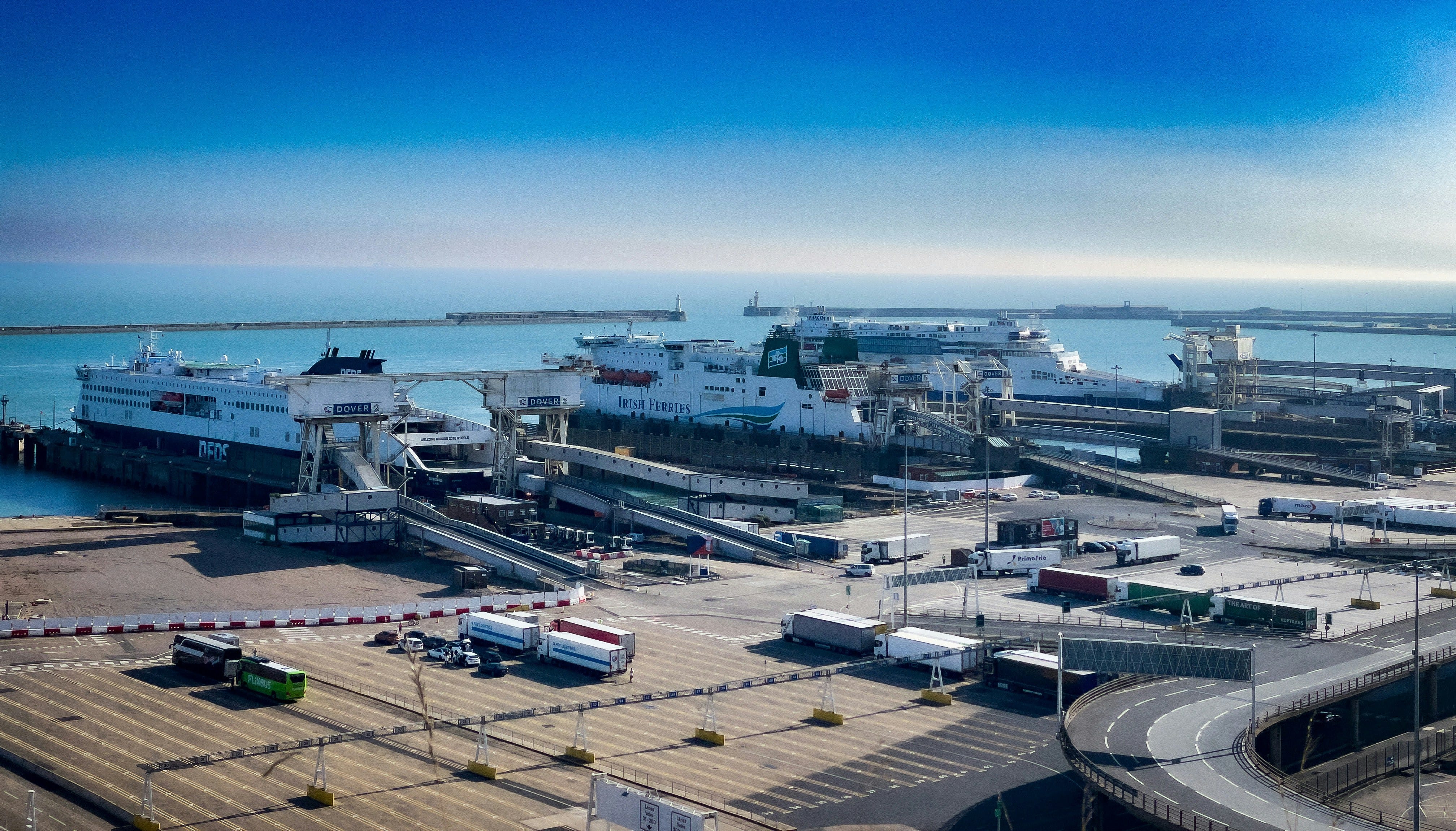
There is a further wrinkle closer to home. From 1 July this year, shipping came fully into the scope of the UK ETS, following the same path the EU ETS took over the preceding two years. Fuel producers and shipowners now face compliance costs on UK voyages that they must weigh against a UK carbon price that is both lower than, and more uncertain relative to, its European counterpart. For an industry that hedges fuel-switching and off-take decisions years in advance, a persistent and unpredictable spread between the two schemes is its own cost, quite apart from the level of either price.
None of this means the case for linkage has weakened. If anything, the argument has sharpened: a shrinking UK cap, a growing CBAM exposure and a newly ETS-liable shipping sector all raise the price of continued delay. What has changed is the politics doing the deciding. A deal that looked close to signed under one prime minister is now, apparently, still open under his successor. Markets have already registered the uncertainty; UKA’s discount to EUA is the clearest evidence of that. Whether Britain’s new government treats linkage as unfinished business or as an inherited commitment worth continuing quickly is likely to matter more to the UK carbon price over the next year than anything happening in Brussels.
Carbon prices are live markets. Figures in this piece reflect closing levels on 14-15 September 2026 and should be checked against a current source before republication.
Thanks for reading Carbon Disruption. I advise on carbon markets, energy and decarbonisation strategy. Get in touch if that's useful. Otherwise, subscribe for free to get new posts.